

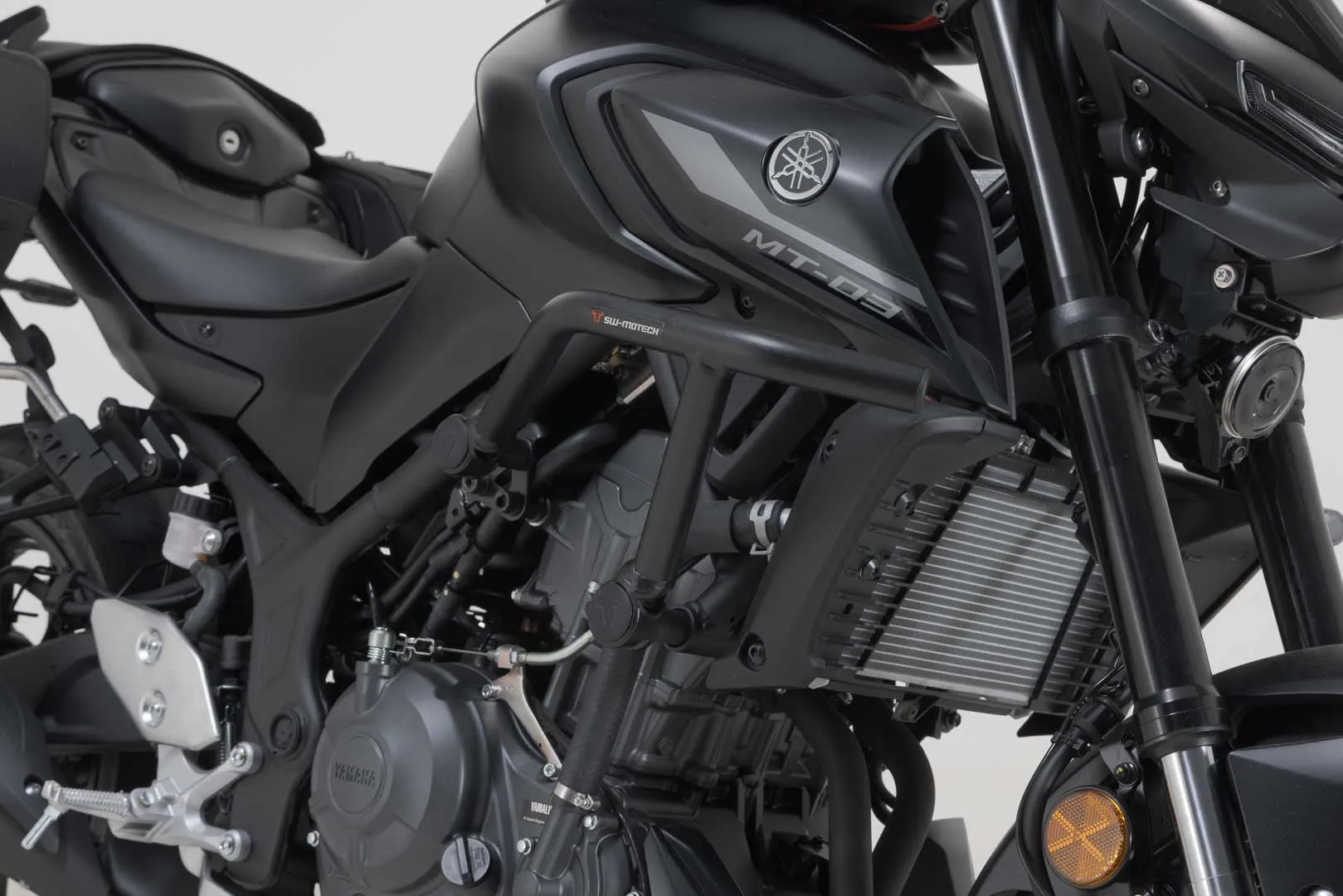
Bike protection should be considered when a motorcycle is ridden for commuting, touring or adventure riding. Some accessories are intended to provide protection to the rider, and others provide protection for certain areas of the motorcycle in the event of impact or contact. The second type of crash bars are the ones that fall. They are typically used in the vicinity of the engine and the lower portion of the motorcycle. It takes more than selecting a product that looks good to choose the right setup. Before you make a decision, fit, construction, mounting, riding style and motorcycle design should all be taken into consideration.
What Are Crash Bars?
Motorcycle crash bars are protective structures mounted to specific points on a motorcycle. Their purpose is to provide an additional layer of protection around selected components, particularly areas that may be exposed during a low-speed tip-over or similar incident.
The design for their motorcycle can differ significantly from one motorcycle to another. Some are small and targeted to a specific area, and others cover more ground around the lower frame and engine. The style will vary with the type of riding and motorcycle. Crash bars are just one component of a protection system, so don’t rely on them for complete protection.
Why Do Riders Consider Them?
A motorcycle can be exposed to different risks during everyday use. A low-speed tip-over, parking mishap, or unexpected loss of balance can put parts of the motorcycle close to the ground at an awkward angle.
In some instances, crash bars provide a little more separation between the motorcycle and the surface. Depending on design and conditions, this may help to protect selected components from direct contact.
For touring and adventure riders, protection can become an even more important consideration because motorcycles may spend more time away from familiar roads and workshops.
Match the Product to Your Motorcycle
One of the most important considerations is compatibility. Crash bars for motorcycle applications are not necessarily universal. A product designed for one model may not fit another because frame design, engine placement, mounting points, and available clearance can differ.
Check fit details before you buy. The exact bike model and build year really matter here. Frame shapes and parts often change from one year to the next. Also, make sure the item does not need any extra parts or a fitting kit to work.
Consider Construction and Mounting
Material and construction are important when evaluating protection equipment. Look at the tubing, joints, mounting plates, finish, and overall construction rather than judging a product only by its appearance.
Mounting is equally important. The bar needs to attach to suitable points designed for the motorcycle. A properly designed system should work with the motorcycle’s existing structure without interfering with important components.
Installation instructions can also tell you a lot about what is involved. If fitting requires access to difficult areas or specific tools, professional installation may be worth considering.
Think About Clearance and Everyday Use
The protection accessory shouldn’t cause any problems when riding normally. Consult any drawings or diagrams for the motorcycle design, noting whether the design impacts any of the following: ground clearance, access to maintenance areas, foot controls, or other parts.
This counts even more if you ride every day. A good add-on helps out best when it stays out of the way during quick fixes or with your other gear.
For adventure motorcycles, also take into account if the style is suited to the kind of terrain that you are riding frequently.
Protection Should Fit Your Riding Style
A level of protection isn’t necessary for all riders. A bike that is ridden primarily in the city might need different things than one that is ridden for touring or off-road riding.
Consider your usual routes, parking scenarios, frequency of riding and motorcycle design. Long-distance riders might also want to wear crash bars along with other adequate protective gear. The idea is to install a reasonable system, rather than all the protection products possible.
Conclusion
The first step to motorcycle protection is to understand how you use your motorcycle, and what parts of it you want to protect. Consider more than looks – compatibility, construction, mounting points, clearance and practicality. When used properly, a crash bar system can be a part of a comprehensive motorcycle protection system. Bigbike.tech is an excellent resource for motorcycle enthusiasts to check out for suitable protection devices and various other motorcycle add-ons for their setups and riding requirements.
FAQs
1. Do crash bars protect the entire motorcycle?
No. They may be used to protect certain areas. They are not always a 100% cover for any product and motorcycle; hence, coverage depends on the product and motorcycle.
2. Are crash bars suitable for every motorcycle?
Not necessarily. Many are model-specific, and compatibility may be dependent on the model, year, frame and mounting points of the motorcycle.
3. Can crash bars affect motorcycle handling?
When designing and installing a system, it must be chosen with the normal usage of the motorcycle in mind. Still consider weight, dimensions and placement prior to installation.
4. Should crash bars be professionally installed?
It really depends on the gear and your skill. If taking off big parts gets tricky, getting an expert to install it is smart.

