

In Aion 2, once your character reaches level 45, Duty Missions and Command Scrolls unlock, becoming core components of your daily and weekly character progression. These systems offer generous reward pools, including key resources such as Hidden Cube Keys, Soul Crystals, Soul Codexes, and various dungeon tickets.
However, most mission rewards are not fixed but distributed across multiple reward slots based on probability. Let’s understand the reward probability structure and the long-term value of different resources with IGGM.com; these are prerequisites for making the right choices.
What is Duty Mission?
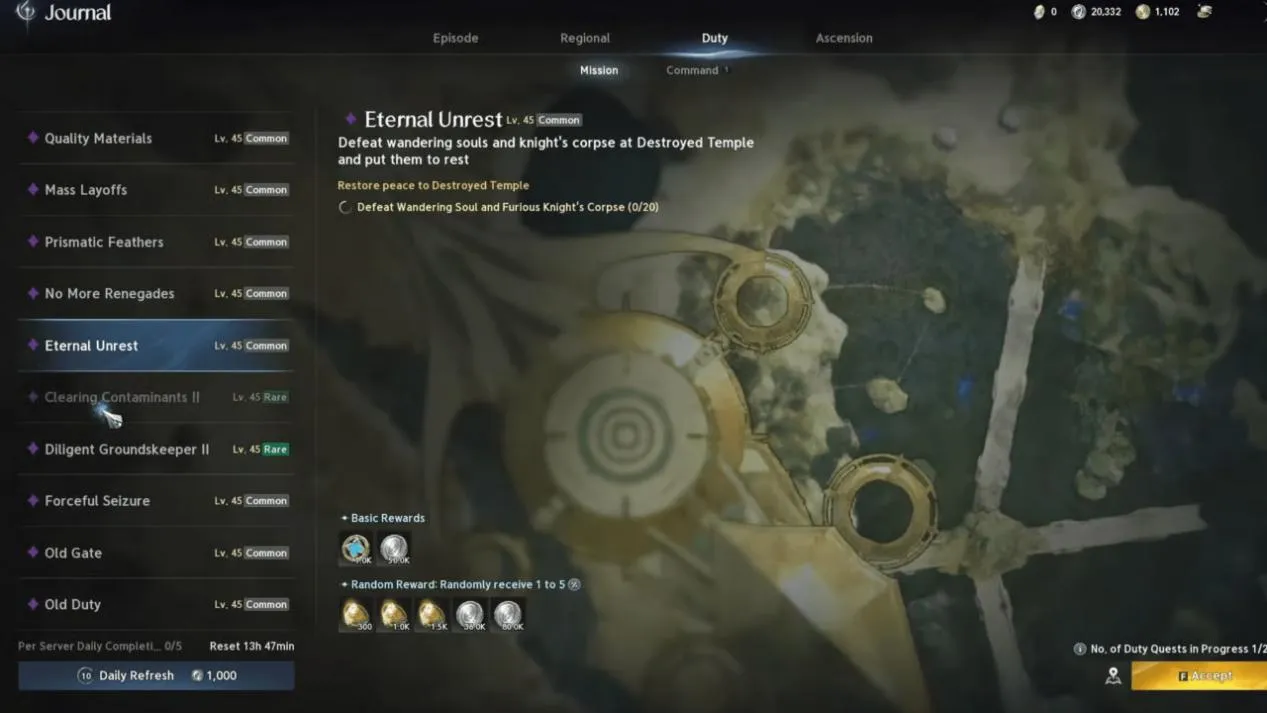
Duty Mission is a daily quest system in Aion 2. After reaching level 45, press the J key to open the quest interface, then select Duty → Missions to enter. Each account can accept a maximum of five Duty Missions per day.
The objectives of Duty Missions are usually quite simple, including defeating a certain number of monsters, completing specific activities, reaching a designated location, or defeating occasionally powerful enemies. Most missions can be completed within minutes.
Reward Priority: Based on Long-Term Value
Duty Missions offer a wide variety of rewards, but the scarcity and difficulty of obtaining different resources vary greatly. Based on the resource’s role in the character’s long-term development, IGGM.com has divided reward priorities into three tiers.
First Priority: Hidden Cube Keys and Soul Crystals
Hidden Cube Keys are the most valuable items among Duty Mission rewards. Hidden Cubes are red cube-shaped treasure chests scattered throughout the world, primarily located in areas such as Verteron, Altgard, Eltnen, and Morheim, totaling approximately 200.
Hidden Cubes, opened with keys, offer extremely generous rewards, including 1,000 Soul Crystals, 180 Superior Power Shards, 5 Soul Codexes, and items such as Silentium, Seed of Detection, and Resurrection Spiritstone. The 1,000 Soul Crystals are particularly valuable – equivalent to the amount accumulated by defeating 1,000 monsters.

Second Priority: Shugo Festival Key and Nightmare Ticket
Shugo Festival Key is essential for participating in Shugo Festival event. This event takes place hourly, and rewards include equipment, enhancement materials, Odyle Energy, Abyss Points, and special festival currency. Three keys can be obtained daily; acquiring additional keys through Duty Missions means more opportunities to participate in the event and richer cumulative rewards.
It’s worth noting that Shugo Festival Keys are less efficient to use before level 45. IGGM.com recommends saving them until level 45 before using them to obtain better rewards.
Nightmare Tickets are used to purchase additional challenge attempts for Nightmare Dungeon. Nightmare is a single-player boss challenge mode in Aion 2, offering two basic attempts per day, up to a maximum of 14.
Nightmare Points earned through Nightmare Dungeons can be used to redeem Divine Crystals and Stigma Shards, while accumulating Phantasmal Fragments for later redemption of higher-tier items.
Third Priority: Soul Codex and Other Auxiliary Resources

Soul Codex is a consumable used in Soul Binding system, enhancing the stats of bound equipment. Each Soul Binding attempt consumes 30,000 Aion 2 Kinah for sale and at least one Soul Codex, with extremely high demand later when optimizing equipment attributes.
Odyle Energy is a universal energy resource required for dungeon entry, typically appearing in small units of 10 points in Duty Missions. Given that daily dungeon runs consume Odyle Energy, and its natural regeneration rate is limited, replenishing energy through Duty Missions has practical daily value.
Ascension Trial Tickets provide additional entries to Ascension Trials. As a challenge available three times per week, Ascension Trial rewards include Enhancement Stones, Amplify Stones, Pet Chests, and Mana Stones. For characters still progressing through gear upgrades, the extra trial attempts are clearly valuable.
Probability Slot Mechanism: How to Correctly Understand the Reward Panel?
After understanding reward priorities, the next key question is: how to select truly valuable missions from the duty mission reward panel? The core principle is – not all items on the reward panel are guaranteed; each slot corresponds to a different probability of obtaining them.
The probability of obtaining a reward slot decreases from left to right: the first slot is 100% guaranteed, the second slot is approximately 50%, the third slot is approximately 33%, the fourth slot is approximately 25%, and the fifth slot is approximately 10%.
This means that the first slot is the only one that can be considered a guaranteed reward. Therefore, the core criterion for choosing a duty mission is very clear: whether the target reward appears in the first slot.
An ideal duty mission should have the following characteristics: the first slot contains a high-value target item, and the second to fifth slots offer additional high-value items as a probability bonus. This combination of a guaranteed minimum and a variable reward maximizes the actual returns of daily missions.
Refresh Mechanism and Decision-Making Process
When no mission on the duty mission panel has a high-value reward in its first slot, you can use Aion 2 Kinah to refresh the mission list. The cost increases with each refresh.
Regarding refresh strategies, a practical principle is to set a daily refresh limit. It is recommended to limit daily refreshes to six, prioritizing missions with a Hidden Cube Key or Soul Crystal in the first two to three refreshes. If no ideal option appears after two to three refreshes, consider accepting the mission with the highest reward value in the first slot of the current list.
If you experience a currency shortage during this process, you can buy Aion 2 gold to quickly replenish it, thus avoiding being forced to choose low-value missions due to insufficient resources, which would affect the efficiency of character growth.

Conclusion
Aion 2’s Duty Missions provide a stable source of resources for character progression, but the varying value of resources and the probability-based distribution mechanism mean that blindly accepting missions can lead to a significant loss of potential rewards.
Focusing on Hidden Cube Keys and Soul Crystals as core objectives, ensuring they appear in the first slot of the reward panel, and finding a reasonable balance between refreshing and accepting missions – IGGM.com’s methodology can be applied throughout the entire game lifecycle after level 45. Doing ten minutes of Duty Missions correctly each day is far more effective in determining long-term growth efficiency than running an extra dungeon or pursuing a high-difficulty challenge.

